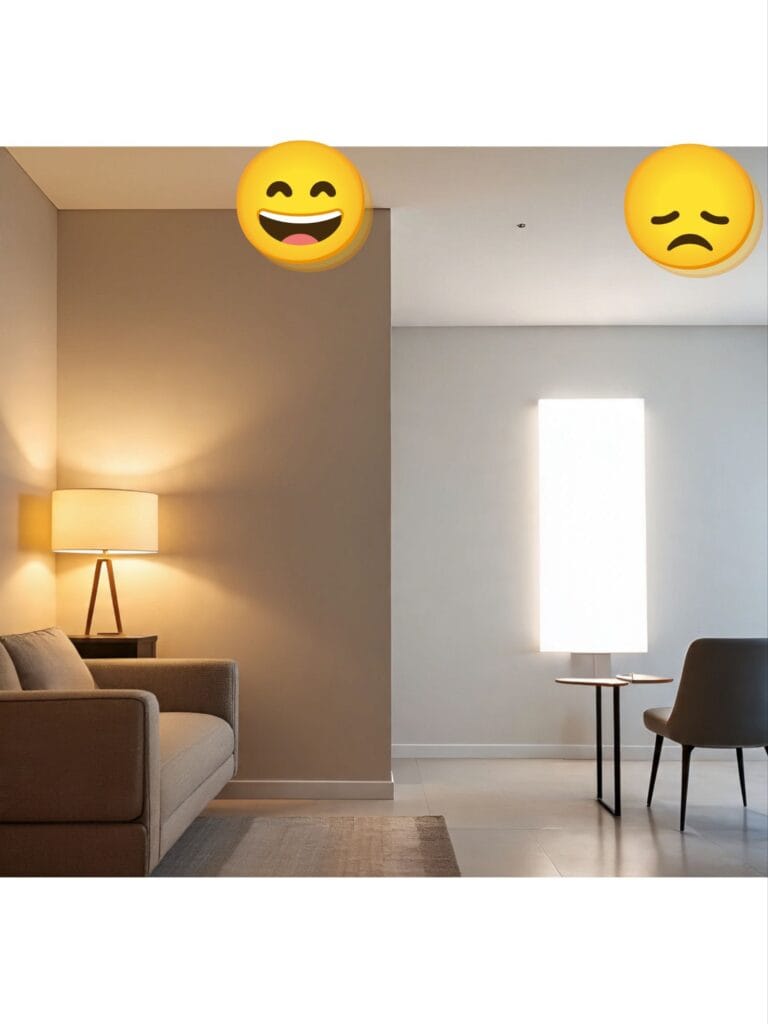
As the sun is the ultimate source of light, and its glow appears warm and golden to our eyes, human life evolved under soft daylight and dim firelight after sunset. For thousands of years, evenings meant darkness, candles, or warm flames—not bright, cool white LEDs.
Today, that rhythm has changed.
Our homes glow with bright white LED lighting long after midnight. Phones shine inches from our faces. Offices and streets are lit in cool, blue-rich light. While this may seem harmless, science shows that constant exposure to artificial white light—especially at night—can disrupt the brain’s internal clock, weaken the function of the pineal gland, and affect both sleep and mental health.
Let’s explore how.
What Is White Light?
White light is a combination of all visible wavelengths. However, most modern white LED lights—especially cool white lights—contain a strong blue light component (wavelength around 450–495 nm).
Examples include:
- LED bulbs
- Smartphone screens
- Laptops and TVs
- Fluorescent office lighting
The Pineal Gland: Your Brain’s Night Switch
Deep in the center of the brain lies a tiny endocrine organ called the Pineal gland. Though small, it performs one of the most critical tasks in the body: producing melatonin, the hormone that regulates sleep.
The pineal gland does not follow a wristwatch. It follows light.
When darkness falls, melatonin rises.
When bright light enters the eyes, melatonin drops.
This system is controlled by the body’s internal clock, located in the suprachiasmatic nucleus (SCN). Special cells in the retina—called intrinsically photosensitive retinal ganglion cells (ipRGCs)—detect light, particularly blue wavelengths, and send signals to the brain about whether it is day or night.
This mechanism evolved under natural sunlight cycles. But artificial lighting has changed the signals dramatically.
How Light Communicates With the Pineal Gland
The pineal gland does not receive light directly. Instead, light enters the eyes and stimulates special retinal cells—called intrinsically photosensitive retinal ganglion cells (ipRGCs)—which contain the pigment melanospsin. These cells are most sensitive to short-wavelength (blue) light and send information to the brain’s internal clock (the suprachiasmatic nucleus) and, indirectly, to the pineal gland.
When light signals reach the brain, they influence the production of melatonin:
- Bright light—especially with blue wavelengths—suppresses melatonin.
- Darkness signals melatonin release.
This mechanism evolved under natural cycles of daylight and night darkness. But modern artificial lighting, particularly white LED light, often disrupts this pattern.
Scientific Findings: White Light and Melatonin Suppression
a. Evidence From Light Exposure Studies
Research consistently shows that exposure to cool white light in the evening suppresses melatonin production more than warm light:
- A recent study measured how different home lighting types affect melatonin suppression. It found that cool white LEDs and cool white CFL lamps suppress melatonin much more than warm white lighting or traditional incandescent bulbs. Warm settings reduced estimated suppression near zero, while cool sources had significantly higher suppression values.
- Earlier animal studies also confirmed that exposure to broad spectrum white light suppresses pineal melatonin content, even at relatively low intensities, regardless of the light source type.
- Research on wavelength effects shows that light containing a high blue component has the greatest ability to reduce nocturnal melatonin levels, while longer wavelengths such as yellow and red are less suppressive.
In simpler terms: white light rich in blue wavelengths signals “daytime” to the brain, reducing the natural nightly rise of melatonin that prepares the body for sleep.
Why White Light Is So Powerful
Modern white LED light is not just “white.” It is often enriched with blue wavelengths (around 450–495 nanometers). Blue light is especially effective at suppressing melatonin.
Scientific studies consistently show:
- Exposure to blue-rich white light at night significantly reduces melatonin levels.
- Even moderate indoor lighting can delay melatonin onset.
- Short-wavelength (blue) light suppresses melatonin more strongly than longer wavelengths like yellow or red.
Research published in peer-reviewed journals has demonstrated that cool white LEDs suppress melatonin significantly more than warm white lighting. In contrast, warmer color temperatures (around 2700K) show minimal suppression compared to cooler lights (5000K and above).
In simple words:
White light tells your brain it is daytime — even if it is midnight.
How This Weakens the Pineal Gland’s Function
It is important to clarify something: white light does not “damage” the pineal gland physically. Instead, it weakens its functional role by repeatedly interrupting melatonin production.
When bright white light is used every evening:
- The pineal gland delays melatonin release.
- The sleep cycle shifts later.
- Circadian rhythm becomes unstable.
Over time, this repeated suppression reduces the natural strength and timing of melatonin secretion.
The result is not immediate disease — it is gradual biological confusion.
Why Melatonin Matters for Sleep and Health
Melatonin is often called the “sleep hormone,” but its role is broader:
- Regulates sleep onset and quality.
- Synchronizes the internal circadian rhythm (sleep-wake cycle).
- Helps coordinate other hormones and nervous system functions.
When melatonin release is suppressed at night, it can lead to:
- Delayed sleep onset (taking longer to fall asleep)
- Reduced total sleep duration
- Poor sleep quality
- Disrupted circadian rhythm
Over time, chronic disruption of sleep affects cognitive performance, emotional stability, physical recovery, and long-term health.
The Sleep Consequences
Melatonin is not just about falling asleep. It also:
- Regulates sleep depth
- Controls nighttime body temperature
- Supports cellular repair
- Synchronizes hormonal rhythms
When melatonin is suppressed:
- You take longer to fall asleep
- Sleep becomes lighter and fragmented
- You wake up feeling less refreshed
Many people today describe feeling “tired but wired.” This state often reflects circadian misalignment caused by late-night light exposure.
White Light and Mental Health

Sleep and mental health are deeply interconnected.
Scientific research shows that chronic sleep disruption increases the risk of:
- Anxiety
- Mood instability
- Irritability
- Depressive symptoms
- Reduced stress tolerance
Circadian rhythm disruption is also linked to emotional dysregulation. When the body’s internal clock is misaligned, hormone balance—including cortisol and serotonin rhythms—can be affected.
White light at night does not directly cause depression or anxiety. But by interfering with sleep and biological timing, it may contribute to mental fatigue and emotional instability over time.
Good sleep is one of the strongest protective factors for mental health. And light exposure plays a major role in determining sleep quality.
Why Yellow Light Is Considered Better

1. Lower Blue Spectrum Content
Warm yellow light (2700K–3000K color temperature) contains much less blue light. This means:
- Less stimulation of ipRGC cells
- Less melatonin suppression
- More natural sleep preparation
2. Mimics Natural Evening Light
As the sun sets, its light becomes warmer due to atmospheric scattering. This natural shift signals to the body that night is approaching.
Yellow light mimics this sunset tone, supporting the body’s biological clock.
3. Reduced Eye Strain
Cool white and blue light scatter more in the eye and may contribute to:
- Digital eye strain
- Headaches
- Visual fatigue
Warm light is often perceived as softer and more relaxing.
Why Yellow Light Is a Better Evening Choice
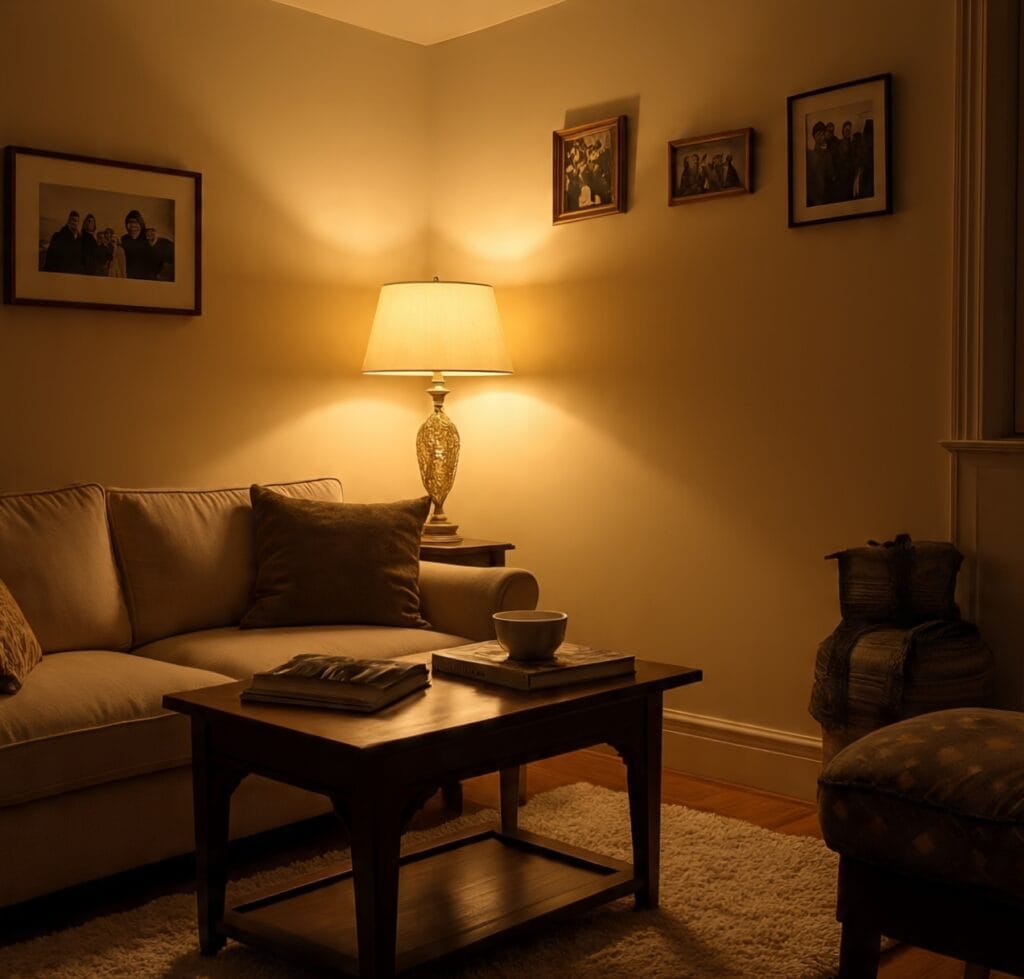
Yellow or warm light (typically 2700–3000K):
- Contains less blue wavelength
- Suppresses far less melatonin
- Mimics natural sunset tones
- Feels softer on the eyes
Because it stimulates the retinal light sensors less aggressively, warm light allows the pineal gland to begin melatonin production naturally.
Psychologically, warm lighting also creates a calmer atmosphere. It feels intimate, relaxing, and safe. This is why restaurants and homes often use warm light to create comfort, while offices use cool white light to enhance alertness.
Yellow light does not make you sleepy instantly. It simply stops interfering with the brain’s natural transition toward sleep.
White Light Is Not the Enemy
White light has benefits:
- Improves alertness in the morning
- Enhances concentration during work
- Supports productivity
Morning sunlight itself is bright and contains blue wavelengths. That exposure is healthy and necessary.
The problem is not white light.
The problem is white light at the wrong time.
When bright white lighting is used late at night in bedrooms and living spaces, it overrides the natural signal for rest.
What Science Suggests We Should Do
For better pineal function and healthier sleep:
- Use bright white or cool lighting during the day.
- Switch to warm (2700K or lower) lighting after sunset.
- Dim lights in the evening.
- Reduce screen exposure 1–2 hours before bed.
This approach respects the body’s biological design instead of fighting it.
Comparative Effects: White vs Yellow Light
| Factor | Cool White Light | Warm Yellow Light |
|---|---|---|
| Blue Light Content | High | Low |
| Melatonin Suppression | Strong | Minimal |
| Alertness | Increases | Gentle |
| Best Use Time | Morning / Office | Evening / Bedroom |
| Impact on Sleep | Delays sleep | Supports sleep |
Practical Recommendations
If you want to protect your pineal gland function:
1. Use Warm Light After Sunset
Choose bulbs labeled:
- 2700K or lower
- “Warm white”
- “Soft white”
2. Reduce Screen Blue Light
- Enable night mode
- Use blue-light filters
- Avoid screens 1 hour before bed
3. Get Morning Sunlight
Spend 10–20 minutes outside in natural morning light.
4. Keep Bedroom Dim
Use lamps instead of overhead bright LEDs at night.
When Should You Replace Your White Light?
You should consider replacing it if:
- You struggle to fall asleep
- You feel mentally tired at night but can’t relax
- Your bedroom lighting feels harsh
- You experience frequent headaches or eye strain
- Your home feels “cold” rather than comfortable
Final Thoughts
Human biology evolved under a clear pattern: bright day, warm evening, dark night.
Modern white lighting has extended daytime into midnight. While efficient and convenient, excessive evening exposure disrupts melatonin production and interferes with the pineal gland’s natural rhythm.
Over time, this can affect sleep quality, energy levels, emotional balance, and overall well-being.
Replacing harsh white light with warm yellow light in the evening is a simple yet powerful step toward restoring biological harmony.
Sometimes better health does not require complex interventions.
Sometimes, it begins with something as small as changing the light above your head.
RELATED : https://tinselisland.com/fatal-familial-insomnia-a-familys-struggle/
Sources :
1.Home lighting, blue-light filtering, and their effects on melatonin suppression . nature
2. Light-emitting diodes and cool white fluorescent light similarly suppress pineal gland melatonin and maintain retinal function and morphology in the rat. PubMed
