Introduction:
Ibn Sina : A Mind That Shaped Civilizations
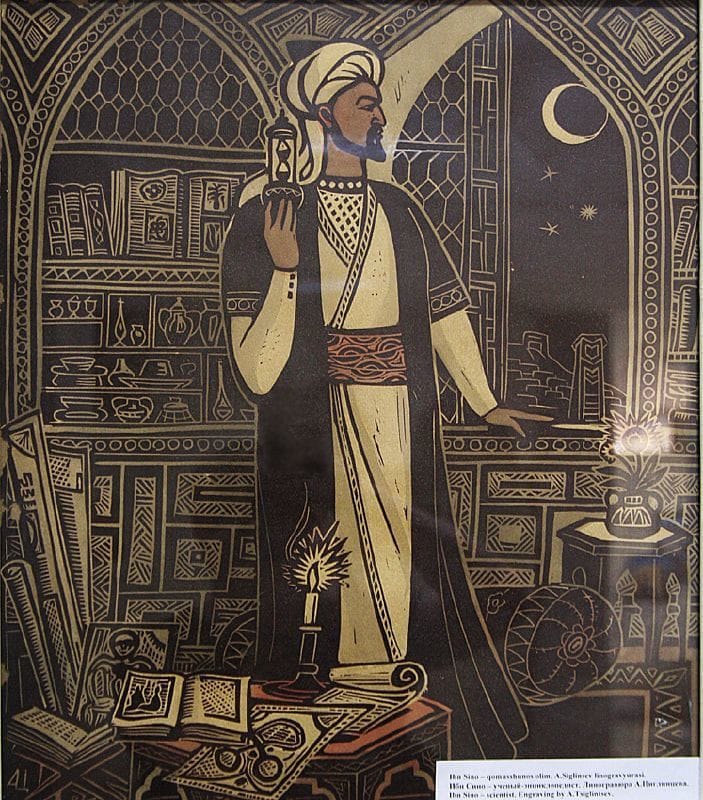
In the vast history of human knowledge, few figures stand as tall as Ibn Sina (980–1037 CE), known in the West as Avicenna .towering intellectual of the Islamic Golden Age, Ibn Sina was not merely a physician—he was a philosopher, scientist, astronomer, mathematician, and visionary thinker whose influence stretched from Central Asia to medieval Europe.
His works dominated medical education for over 600 years, and many of his ideas laid the groundwork for modern science, medicine, and philosophy. What makes Ibn Sina remarkable is not just what he wrote—but what he invented, discovered, and systematized.
This article provides a deep, comprehensive exploration of his inventions, scientific contributions, and enduring legacy.
1. Early Life and Formation of a Genius
Ibn Sina: Birth and Background
Ibn Sina was born in 980 CE in Afshana, near Bukhara (modern-day Uzbekistan), then part of the Samanid Empire. His father was a respected official, and his household was intellectually vibrant.
By the age of:
10 → He memorized the Qur’an
16 → He mastered medicine
18 → He became a practicing physician
He reportedly said:
“Medicine is not a hard science, and I excelled in it in a very short time.”
2. The Canon of Medicine: A Revolutionary Medical Encyclopedia
What is The Canon of Medicine?
His most famous work,
The Canon of Medicine, is one of the most influential books in medical history.
Structure of the Canon
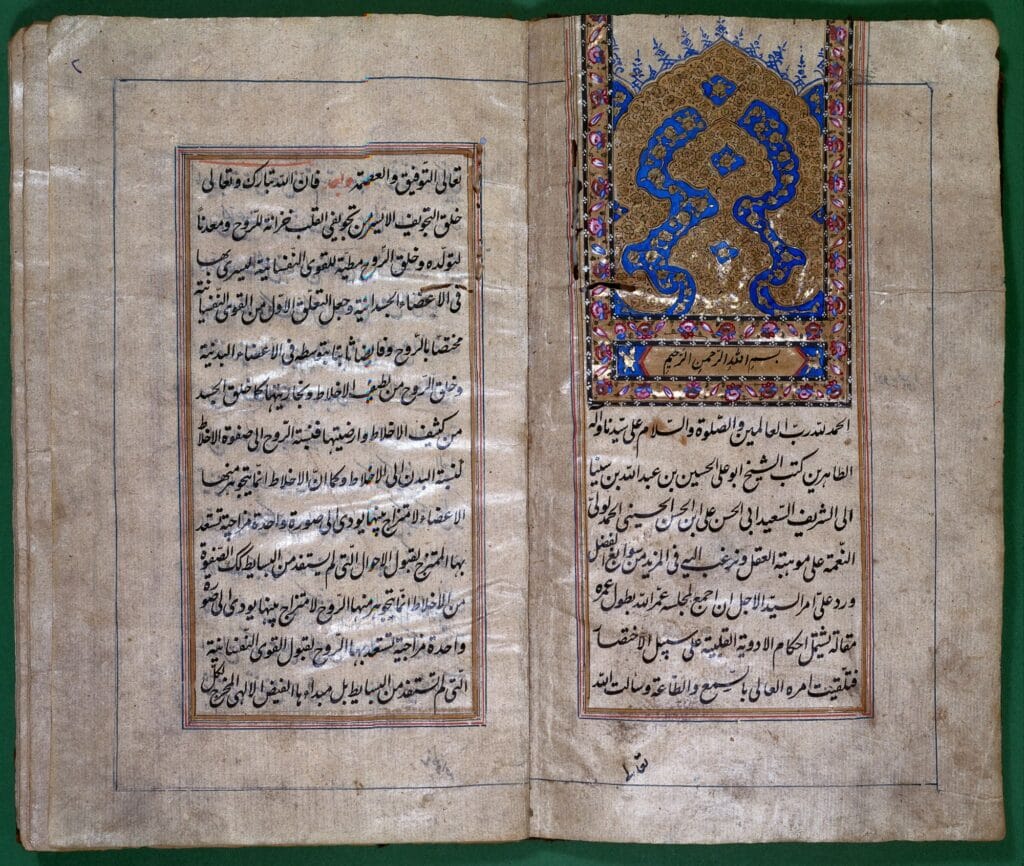
It consists of five volumes:
General medical principles
Simple drugs (pharmacology)
Diseases of specific organs
General diseases (fevers, infections)
Compound medicines
Why It Was Revolutionary
Systematized all known medical knowledge
Introduced evidence-based medicine
Explained diseases scientifically rather than spiritually
Translated into Latin and used in Europe until the 17th century
3. Invention of Early Clinical Trials
One of Ibn Sina’s greatest contributions was introducing experimental medicine.
His Method of Testing Drugs
He laid out rules for testing medicines:
Test on a single condition
Observe effects carefully
Repeat experiments
Compare results
This is the foundation of:
Modern clinical trials
Pharmacology research
He emphasized that:
“A drug must be tested on humans, not just animals.”
This was centuries ahead of its time.
4. Discovery of Contagion and Quarantine
Understanding Disease Transmission
Ibn Sina proposed that diseases spread through:
Air
Water
Physical contact
This idea relates directly to what we now call:
Germ theory (developed much later)
Concept of Quarantine
He introduced isolation methods to prevent disease spread:
Separating infected individuals
Limiting exposure
This early form of quarantine is still used today in pandemics like COVID-19.
5. Medical Instruments and Surgical Innovations
Catheters and Surgical Tools
Ibn Sina invented:
Flexible catheters made from animal skin
Surgical instruments designed for precision
These tools improved:
Patient comfort
Surgical success rates
Advances in Surgery
He described:
Methods for removing tumors
Treatment of wounds
Bone fracture management
6. Contributions to Anatomy and Physiology
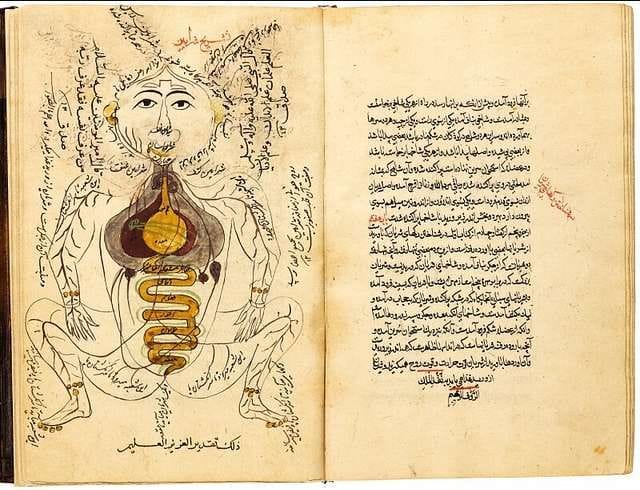
Understanding the Human Body
Ibn Sina described:
Organs and their functions
Blood circulation (partially understood)
Brain as center of thought
Neurological Insights
He identified:
Brain injuries affecting movement
Causes of paralysis
Early ideas of psychological disorders
7. Mental Health and Psychology
Ibn Sina was one of the first to treat mental illness scientifically.
His Contributions
Recognized depression and anxiety
Linked emotions with physical health
Used talk therapy (early psychotherapy)
Famous Case

He treated a prince who believed he was a cow by:
Understanding his psychology
Gradually restoring his sanity
8. Pharmacology and Herbal Medicine
Systematic Drug Classification
In The Canon, Ibn Sina listed:
760+ drugs
Their effects
Dosages
Herbal Innovations
He studied:
Plant-based medicine
Mineral and animal-derived drugs
Many of his remedies are still used in traditional medicine.
9. Astronomy and Scientific Instruments
Astronomical Discoveries
Ibn Sina:
Studied planetary motion
Critiqued Ptolemy
Improved astronomical measurements
Instruments
He developed:
Devices to measure star positions
Tools to calculate distances
10. Physics and Natural Science
Speed of Light vs Sound
He correctly observed:
Light travels faster than sound
This was proven centuries later.
Motion and Force
He discussed ideas similar to:
Inertia
Force and motion
These ideas influenced later scientists like Isaac Newton.
11. Geology and Earth Sciences
Mountain Formation
Ibn Sina explained:
Mountains form due to geological processes
Not just divine or mythical causes
Fossils
He observed:
Fossils are remains of ancient life
Land was once underwater
This was groundbreaking for his time.
12. Philosophy and Logic
Major Philosophical Work
His famous book:
The Book of Healing
Contributions
Developed logic systems
Explored existence and reality
Influenced both Islamic and European philosophy
Key Idea: Necessary Being
He argued:
There must be a Necessary Being (God)
Everything else depends on it
13. Influence on Europe and the Renaissance
Translation into Latin
His works were translated in medieval Europe and used in:
Universities
Medical schools
Impact
He influenced:
Thomas Aquinas
Leonardo da Vinci (indirectly)
14. Ibn Sina’s Scientific Method
Key Principles
Observation
Experimentation
Logical reasoning
These principles became the foundation of:
Modern science
15. Legacy in the Modern World
Medicine
Clinical trials
Diagnosis methods
Pharmacology
Science
Early physics concepts
Geological understanding
Philosophy
Metaphysics
Logic
16. Misconceptions About Ibn Sina
Myth: He only copied Greek knowledge
Reality: He improved and expanded it significantly
Myth: He was just a doctor
Reality: He was a universal genius
17. Why Ibn Sina Still Matters Today
His ideas are still relevant because:
Evidence-based medicine is standard
Scientific reasoning is essential
Interdisciplinary knowledge is valued
Conclusion: The Man Who Bridged Worlds
Ibn Sina was not just a scholar—he was a bridge between civilizations. His work connected:
Ancient Greek knowledge
Islamic scholarship
European Renaissance thinking
He transformed medicine from tradition into science, introduced experimental methods, and reshaped philosophy.
Even today, his intellectual fingerprints are visible in:
Hospitals
Universities
Scientific research
He remains one of the greatest minds in human history—proof that knowledge, when pursued with passion and discipline, can change the world.
